Miami Real Estate
Best Neighborhoods in Miami to Buy a House
Quick Answer
The best area to buy a house in Miami depends on what matters most to you — lot size, waterfront access, walkability, commute, privacy, property type, budget and how long you expect to own. Coral Gables, Pinecrest, Coconut Grove, Key Biscayne, Miami Beach, Palmetto Bay and South Miami are the areas buyers compare most often, and each offers a very different housing market and lifestyle.
Best Areas to Buy a House in Miami
Miami is not one housing market. Within a 30-minute radius you can buy a half-acre lot in a low-rise suburban village, a 1920s house on a canal with dock access, a townhome in a walkable village core, or a condominium in a financial district. The areas below are the ones buyers shortlist most often, and each one is distinguished by its housing stock rather than by a ranking.
Coral Gables
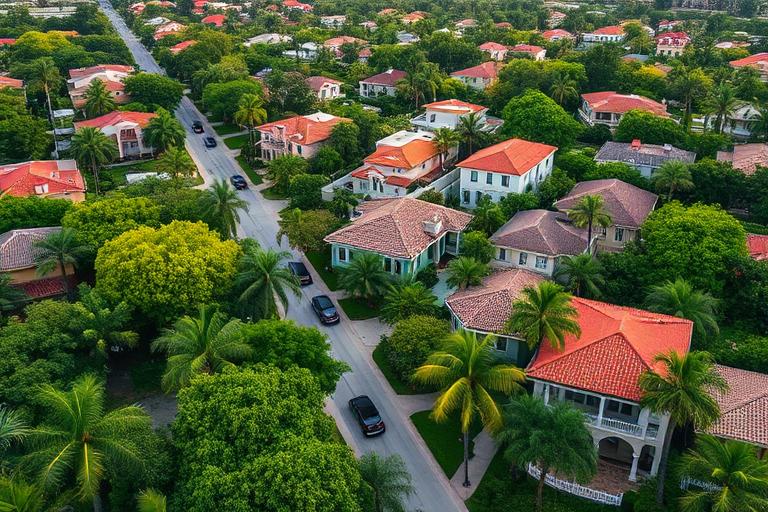
A planned city with Mediterranean Revival architecture, banyan canopy and strict zoning, administered by the City of Coral Gables, that keeps streetscapes consistent. Inventory ranges from modest three-bedroom houses in the older sections to waterfront estates in controlled-access enclaves such as Gables Estates, Cocoplum and Snapper Creek Lakes. Buyers looking at Coral Gables for long-term value should treat it as a collection of pockets — the Historic District, the sections north of Bird Road and the waterfront canals behave differently on lot size, buildability and resale demand.
Pinecrest
Larger lots, low-rise residential character and a Village of Pinecrest government focused on code enforcement. Pinecrest attracts buyers who want land and privacy without gating, and much of the older ranch inventory is bought for renovation or replacement, which is why new construction shows up throughout the village.
Coconut Grove
Miami's oldest neighborhood, and the strongest option for buyers who want walkability plus tree canopy. Housing runs from inland bungalows on small lots to bayfront Miami waterfront homes with private docks. Single-family supply is genuinely limited here, so well-located houses move quickly.
Key Biscayne
An island village reached by the Rickenbacker Causeway, with beach and park access, a compact footprint and a mix of single-family houses and condominium buildings. The commute is scenic but causeway-dependent, which is worth testing before you buy.
Miami Beach
Best known for condominiums, but the barrier island governed by the City of Miami Beach also holds single-family neighborhoods — the Venetian Islands, Sunset Islands, La Gorce and the Mid-Beach streets — where dock access and elevation vary house by house.
Palmetto Bay and South Miami
Two very different answers to the same question. Palmetto Bay offers wide lots and a quiet residential grid further south; South Miami offers a small walkable downtown, Metrorail access and older houses on smaller lots closer to Coral Gables.
Condominium alternatives: Brickell, Edgewater and Bal Harbour
Buyers who start out looking for a house sometimes end up buying a condo in Miami once they weigh maintenance and location. Brickell offers the most walkable urban core, Edgewater offers bay frontage a few minutes north, and Bal Harbour offers staffed oceanfront buildings. In each case the association budget, reserves and rental rules matter as much as the unit itself.
Current MLS Inventory
Browse Homes for Sale in These Miami Neighborhoods
Search current listings on Ariana's property search page to compare the areas above against active inventory, price per square foot and days on market.
Current Inventory
Ready to See What's Available?
Explore current homes for sale across the Miami neighborhoods discussed in this guide.
Explore Miami Homes for SaleWhere to Buy a House in Miami
Choose the area by working backwards from four decisions: the property type you actually want (house, townhome or condominium), the amount of land you need, whether water access is required, and the commute you are willing to drive at rush hour rather than at noon.
Those four answers usually eliminate most of Miami-Dade quickly. If you need a half-acre lot, the search moves south. If you need dock access with ocean reach, it moves to specific canals and islands. If you want to walk to dinner, it moves to a handful of village cores. Once the shortlist is down to two or three areas, comparing them against live inventory is more useful than reading more neighborhood descriptions.
Explore Miami Neighborhoods
Each community page covers the housing stock, property types and market character of an individual Miami neighborhood, which is the fastest way to narrow a shortlist before touring.
Explore Miami Homes for Sale
Search current Miami real estate listings by area, price and property type to see what your budget actually buys in each neighborhood today.
Best Areas to Live in Miami
Lifestyle intent narrows faster than price. A compact comparison of what each area emphasizes and what to verify before deciding:
| Area | Comparison emphasis | Decision to check |
|---|---|---|
| Coral Gables | Architecture, varied lot and waterfront settings | Specific pocket, street and comparable inventory |
| Pinecrest | Larger lots and residential space | Lot characteristics and commute |
| Coconut Grove | Walkable village areas and tree canopy | Specific location and available housing type |
| Key Biscayne | Island setting, houses and condominiums | Causeway-dependent commute and building/property details |
| Miami Beach | Condominiums and island house neighborhoods | Building, waterfront access and elevation |
| Palmetto Bay / South Miami | Different combinations of lot size and access | Test the actual commute and nearby amenities |
Condominium-focused buyers usually add Brickell, Edgewater and Bal Harbour to the comparison, while those prioritizing controlled access look at Gables Estates, Cocoplum, Snapper Creek Lakes, Deering Bay and Old Cutler Bay, and buyers wanting space or boating access often include Ponce-Davis, High Pines and Keystone Point.
Buyers focused on the upper end of any of these categories usually end up comparing the same small set of streets; the overview of Miami luxury real estate covers how those markets differ from the broader county.
Private Consultation
Not Sure Which Miami Neighborhood Fits You Best?
Tell Ariana what matters most — location, property type, lot size, waterfront access, walkability, privacy, commute or budget — and she can help narrow the search.
Best Neighborhoods for Family Homes in Miami
Buyers shopping for a larger household typically compare lot size, interior layout, park access, commute times, street traffic and how much of the neighborhood is through-traffic versus interior residential streets. Pinecrest, Palmetto Bay, Coral Gables, Coconut Grove and South Miami come up most often because they combine low-rise residential character with everyday amenities nearby.
Practical items worth checking on any specific house: lot dimensions and setbacks if you may expand later, whether the street is a cut-through at rush hour, distance to the nearest park, and the actual drive time to work tested in the morning. Buyers may also review school boundaries and publicly available school information directly through Miami-Dade County Public Schools, since attendance zones can split a single neighborhood.
Best Miami-Dade Neighborhoods for First-Time Buyers
First-time buyers in Miami-Dade are usually best served by widening the geography and comparing total monthly cost rather than sticker price. South Miami, Kendall, Cutler Bay, Palmetto Bay, Westchester and townhome inventory near the urban core all come up regularly, and each trades something — land, commute time or property age — for a lower entry point.
Before comparing neighborhoods, run the numbers on all of it: purchase budget, monthly payment, property taxes, insurance, any HOA or condominium fee, expected maintenance for the age and type of property, and how long you plan to own. Two properties at an identical price can differ by hundreds of dollars a month once insurance and association fees are included, and a shorter expected hold period raises the weight of resale demand.
Buying a Home in Miami
Ariana's buyer representation covers offer strategy, inspections, association document review and closing coordination — the parts of a first purchase where the neighborhood choice turns into a contract.
Buying Your First Home in Miami?
Ariana can help you understand the process, compare areas, evaluate properties and know what to expect from the search through inspections and closing.
How Do I Know if a Neighborhood Is Appreciating in Miami?
You can evaluate whether a Miami neighborhood is appreciating by comparing recent closed sales to historical sales of similar properties in the same pocket, then reviewing inventory levels, days on market, the spread between asking and closing prices, buyer demand, redevelopment and teardown activity, new construction nearby, and how limited the supply of comparable properties is.
No single indicator is conclusive. Appreciation becomes credible when several point the same way over multiple years, and it is measured at the pocket level rather than the city level — one side of a boulevard can behave differently from the other.
- Comparable sales: the same property type, lot size and water access, not just the same ZIP code
- Inventory and days on market: falling supply with shorter marketing times signals demand
- Asking versus closing behavior: repeated price reductions tell a different story than at- or above-ask closings
- Redevelopment activity: teardowns, renovations and permits show where capital is going
- Supply constraints: built-out areas with little developable land behave differently from areas still absorbing new construction
- Property type: single-family land value and condominium value respond to different pressures
This is also the right lens for buyers researching which Coral Gables pockets to invest in. Rather than treating the city as one market, weigh the specific section, lot size and condition, whether the property is on a navigable canal, how much redevelopment is happening on the street, the limited supply of comparable lots and recent closings on that block. Past performance does not guarantee future appreciation in any Miami neighborhood.
Miami New Developments
New construction pipelines change how a neighborhood prices resale inventory, so reviewing Miami new developments nearby is part of assessing an area's direction.
Miami Home Valuation
A property-level valuation shows how a specific house sits against its own comparables, which is more useful than a neighborhood average when you are deciding what to offer.
Comparing Miami Neighborhoods for Long-Term Ownership?
Ariana can help you compare recent sales, current inventory, redevelopment, property type and neighborhood-specific supply before you narrow your search.
Discuss Your Miami Property SearchWhat to Consider When Looking for a More Private or Controlled-Access Neighborhood in Miami
If privacy and controlled access are priorities, evaluate how access is actually managed rather than whether a community is described as gated. That means looking at entrance staffing hours, whether interior streets are privately owned and maintained, visitor and camera systems, building lobby staffing for condominiums, and what the association fee funds.
Property type matters too: a staffed oceanfront building, a canal-front house behind a guarded entrance and an ungated street with large setbacks each deliver privacy differently. Review the HOA or condominium documents, budget and reserves before assuming a level of service, and consult publicly available local crime information from Miami-Dade County sources for the specific area you are considering rather than relying on neighborhood reputation.
The guide to gated and private communities in Miami covers how these communities are structured, and buyers comparing several of them usually benefit from working with an agent like Ariana Thompson who can review association documents and access arrangements side by side.
Comparing Miami Neighborhoods Before You Buy
Once you have two or three areas, compare them on the same criteria instead of by impression:
- Property type and inventory available in your price range
- Lot size, setbacks and expansion potential
- Flood zone designation, elevation and its effect on insurance
- Property taxes and homestead exemption eligibility
- HOA or condominium fees, reserves and rules
- Commute tested at peak hours in both directions
- Water access — canal, bay or ocean reach, bridge heights, seawall and dock condition
- Recent comparable closings on the specific street or building
- Known development or zoning changes nearby
For deeper reading, the complete guide to buying property in Miami covers the transaction itself, and the Coral Gables homes and condos guide and Coconut Grove neighborhood overview go one level deeper on two of the areas above.